
Yes, you can still tan while wearing sunscreen SPF 15, because no sunscreen blocks every ultraviolet ray. However, tanning means your skin has responded to UV radiation, and that response also signals skin damage. SPF 15 can reduce exposure to UVB rays and lower the chance of sunburn, but it doesn’t make extended sun exposure safe or prevent all UVA-related effects.
The right application, reapplication, shade, clothing, and choice of broad-spectrum sunscreen all matter. Understanding how SPF works will help you decide whether SPF 15 is suitable for your skin and how to protect it more responsibly.
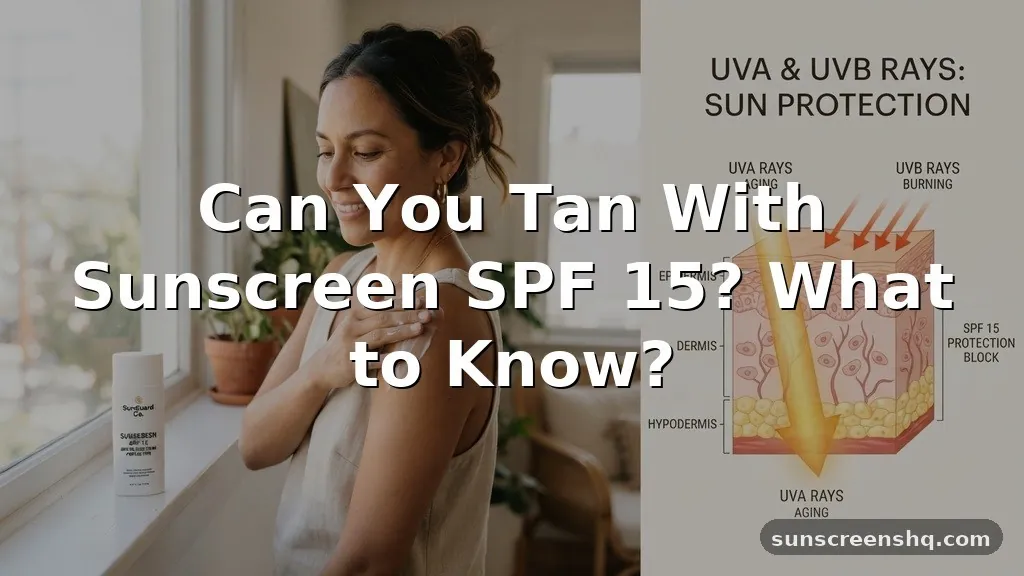
Yes, you can tan with sunscreen SPF 15. SPF measures protection mainly against UVB radiation, the type of ultraviolet light strongly associated with sunburn. An SPF 15 product reduces the amount of UVB reaching protected skin, but it does not create an invisible wall that blocks every sun ray. Some UV still reaches the skin, so tanning may occur.
A tan develops when skin reacts to ultraviolet exposure by producing more melanin, the pigment responsible for darker colour. Sunscreen may slow that process because it reduces the amount of radiation reaching the skin. It doesn’t necessarily stop it completely, especially during prolonged outdoor activity, swimming, sweating, or inconsistent application.
The important distinction is that being able to tan isn’t evidence that the skin is safe. A person might avoid visible redness while still receiving UVA exposure or enough UV radiation to contribute to cumulative skin damage.
UVA rays penetrate more deeply than UVB rays and can contribute to premature skin ageing and changes in skin cells. A product labelled broad-spectrum offers protection against both UVA and UVB radiation, while an SPF number by itself primarily communicates UVB protection.
SPF 15 may provide a degree of everyday sun protection, particularly for brief incidental exposure, but it requires realistic expectations. Sitting in strong midday sunlight for a long period is very different from walking outside briefly. The intensity of the sun, time of day, location, season, cloud cover, reflective surfaces, skin type, and amount of sunscreen all affect the result.
- SPF 15 can reduce UVB exposure but cannot remove it entirely.
- Some people can still develop a tan while wearing it.
- A tan represents a response to UV exposure, not proof of healthy skin.
- Broad-spectrum protection matters because UVA and UVB affect skin differently.
- Reapplication and adequate coverage are as important as the number on the bottle.
What SPF 15 Actually Means
SPF stands for sun protection factor. The number describes how well a sunscreen protects against sunburn caused primarily by UVB rays under test conditions. SPF 15 does not mean that you can stay outside fifteen times longer without risk, and it doesn’t account for every factor that changes real-world sun exposure.
People often interpret SPF as a timer. For example, they may assume that if unprotected skin begins to burn after a certain period, SPF 15 automatically multiplies that time by fifteen. That approach is unreliable.
Sunscreen can rub off, wash away, spread unevenly, or lose effectiveness because a person sweats. The original burn time also changes with UV intensity and individual skin sensitivity.
The difference between SPF values can be easier to understand as a comparison of UVB transmission. These figures describe the intended filtering relationship, not a promise about how long an individual can remain outdoors.
| SPF level | General purpose | What it does not mean |
|---|---|---|
| SPF 15 | Provides basic UVB protection when applied correctly | It does not make prolonged tanning safe or block all ultraviolet radiation |
| SPF 30 | Provides higher UVB protection than SPF 15 | It does not remove the need for reapplication or other sun protection |
| SPF 50 | Provides still higher UVB protection, especially useful for intense exposure or sensitive skin | It is not total protection and does not mean unlimited time in the sun |
SPF 15 can be helpful when it is the product a person will actually apply correctly, but higher SPF generally leaves less UVB reaching the skin. No sunscreen, including SPF 50 or SPF 100, blocks all UV. The label should also say broad-spectrum if the product protects against UVA as well as UVB.
For additional background on sunscreen labelling and safe use, the U.S. Food and Drug Administration’s sunscreen information explains how SPF and broad-spectrum claims are used. The practical lesson is simple: treat SPF as one part of sun protection, not as permission to extend sun exposure.
Why Tanning Can Happen Despite Sunscreen
Sunscreen reduces UV exposure; it doesn’t necessarily eliminate it. A product’s filters absorb, reflect, or scatter part of the radiation that reaches the skin.
If some UVA or UVB passes through, the body may still respond by producing melanin. That response can create a gradual tan, darkening existing pigmentation or making freckles more noticeable.
Application explains much of the difference between the protection printed on the bottle and protection received on the beach or in a garden. Many people apply too little, miss the ears and neck, or forget the backs of the hands and tops of the feet.
Others apply sunscreen once and assume it remains unchanged for hours. Water, towels, clothing, friction, and sweat can all reduce the layer on the skin.
Coverage also varies across the body. A person might carefully protect the face but use little product on the shoulders, chest, or legs.
Those areas may tan or burn sooner. Hair, facial contours, jewellery, and movement can create small gaps that leave skin exposed.
The label’s SPF result comes from controlled testing with an even layer of product. Real-life protection is lower when the sunscreen layer is thin or uneven.
This doesn’t mean SPF 15 is useless. It means the stated number only makes sense when the product is used as directed and combined with sensible behaviour.
UVA protection and the meaning of broad-spectrum
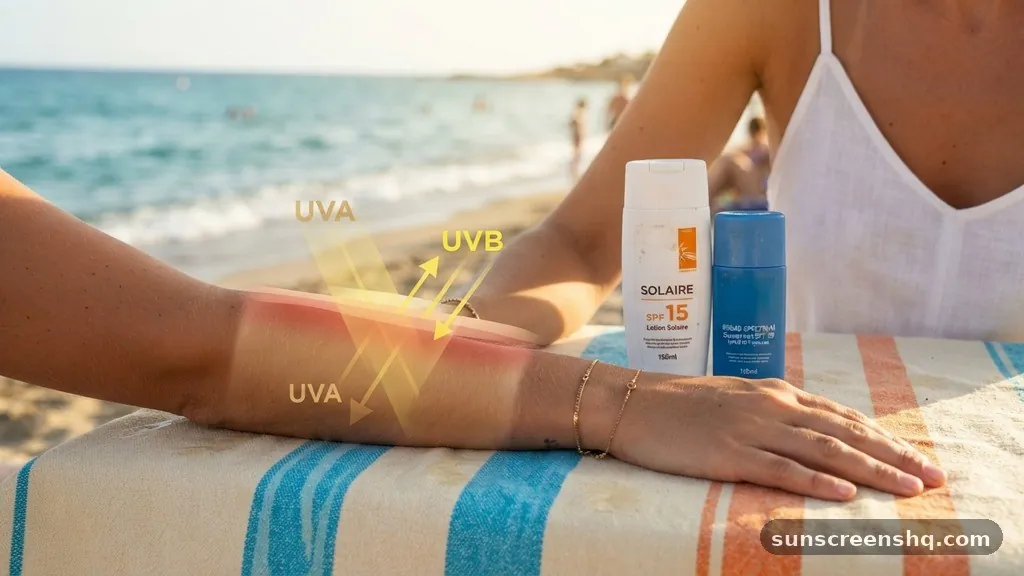
UVA and UVB rays are both forms of ultraviolet radiation, but they do not act identically. UVB is strongly linked with sunburn, while UVA penetrates further into the skin and contributes to tanning and long-term skin changes. A sunscreen can have an SPF number and still offer limited UVA protection unless it is labelled broad-spectrum or includes an equivalent UVA protection claim according to local regulations.
That distinction matters for someone who wants a glow without obvious redness. A tan can develop with little immediate sunburn, particularly when UVA exposure is significant. Avoiding a burn is important, but avoiding a burn alone does not mean the skin has avoided damage.
Is SPF 15 Enough for Tanning?
Whether SPF 15 is enough depends on the situation, but it is not the strongest choice for deliberate, extended tanning. People with very fair or sensitive skin may burn quickly, making lower SPF particularly unsuitable for intense sunlight. Children, people with a history of skin cancer, and anyone taking medication that increases photosensitivity may need especially careful protection and professional advice.
Skin tone affects how quickly visible redness appears, but it doesn’t remove the effects of ultraviolet radiation. Darker skin contains more melanin and may burn less readily, yet it can still experience sun damage, uneven pigmentation, premature ageing, and skin cancer. A sunscreen decision should therefore focus on exposure conditions and health needs, not only on whether someone usually burns.
SPF 15 may be reasonable for some brief, ordinary exposure when a person uses it correctly and supplements it with clothing or shade. It is a weaker choice for beach days, outdoor sport, boating, hiking, or any situation involving strong sun for several hours. In those settings, broad-spectrum SPF 30 or higher is commonly a more protective option, alongside reapplication and physical barriers.
Trying to tan faster by using a lower SPF creates a poor trade-off. Lower protection allows more UV to reach the skin, but it doesn’t produce an even or controlled result.
Instead, it can increase the likelihood of redness, peeling, blotchy colour, and cumulative skin damage. A gradual change in skin colour still reflects ultraviolet exposure.
Situations where SPF 15 may fall short
SPF 15 deserves extra caution in the following circumstances:
- Strong midday sun creates more intense UV exposure than mild morning or late-afternoon conditions.
- Water and sand reflect radiation, increasing exposure to areas that may already have sunscreen on them.
- Sweating and swimming can remove or thin the protective layer.
- Wind and cool temperatures can make the skin feel comfortable even while UV exposure continues.
- High-altitude environments can increase the need for careful sun protection.
- People with very fair skin may develop sunburn before they notice that their skin is getting too much sun.
Cloud cover is not a guarantee of safety either. Some ultraviolet radiation can still reach exposed skin on bright or overcast days. Checking local UV information can help people judge the need for shade, clothing, and a higher level of sunscreen.
How Long Can You Tan With SPF 15?
There is no reliable universal answer to how long you can tan with SPF 15. The product label cannot calculate a safe tanning window for every person. Skin sensitivity, UV intensity, application thickness, reapplication, water exposure, cloud cover, location, and the time of day all change the outcome.
Someone may begin to burn quickly in intense sun despite applying SPF 15, while another person may show no immediate redness after the same period. The absence of a sunburn doesn’t prove that no damage occurred. UVA exposure can contribute to tanning and skin changes without producing the same immediate warning signs as UVB.
It is also risky to wait until the skin feels hot or looks pink before taking action. Sunburn can become more obvious after leaving the sun, and early redness already indicates excessive exposure. A better approach is to limit direct sun, seek shade before the skin feels uncomfortable, cover exposed areas, and reapply sunscreen according to the product directions.
Why the “SPF times longer” calculation fails
The familiar time-multiplication idea ignores how sunscreen is used in real life. It assumes a perfect, uniform layer that remains intact, which rarely happens. It also treats UV intensity as constant, even though the amount of radiation can change throughout the day and varies with surroundings.
For example, a person may apply sunscreen before leaving home, swim later, dry off with a towel, and then continue outdoors. The protection on the shoulders and arms may no longer match the protection measured at application. Reapplying doesn’t make prolonged exposure harmless, but it helps maintain the intended level of protection.
Sun protection should therefore be based on exposure management rather than a countdown. Use sunscreen generously, reapply as directed, wear protective clothing, use shade, and leave direct sunlight when conditions feel intense. These steps help reduce risk whether the product is SPF 15, SPF 30, or SPF 50.
SPF 15 Compared With SPF 30, 50, and Higher
People searching for SPF 15 often compare it with SPF 30, SPF 50, or even SPF 70 and SPF 100. The central principle is that a higher SPF provides greater protection against UVB under test conditions, but the increase is not a licence for longer exposure. Higher numbers still need correct application and reapplication.
Moving from SPF 15 to SPF 30 can be useful for people who burn easily or spend more time outdoors. SPF 50 may provide an additional margin for intense exposure, sensitive skin, or situations where people tend to apply less product than the test amount. None of these products guarantees that a person won’t tan, because tanning can involve UVA exposure and no sunscreen blocks all ultraviolet radiation.
SPF 8 and SPF 20 may appear in tanning products or everyday lotions, but a low number should not be treated as a tanning control. A tanning sunscreen may reduce some UVB exposure while still allowing substantial radiation through. Product claims also differ by region, so reading the full label matters more than relying on marketing language such as “tan,” “glow,” or “bronzing.”
SPF 100 is not total protection either. The number communicates high UVB protection under testing, not complete blocking of sun rays. The broad-spectrum label, water-resistance directions, expiry information, and instructions for reapplication all matter alongside the SPF value.
Choosing based on the exposure, not the desired tan
A useful decision starts with the setting. Short, routine exposure may call for a different product choice from an afternoon at the beach. The person should also consider whether they burn quickly, take medication that affects sun sensitivity, have a history of abnormal moles or skin cancer, or need to protect areas with existing pigmentation.
Someone who wants a tanned appearance can consider cosmetic options that don’t require deliberate UV exposure. Self-tanning products create colour on the surface of the skin, but they do not replace sunscreen. A cosmetic tan also doesn’t protect against UVA or UVB unless the product separately contains sunscreen with appropriate labelled protection.
How to Use SPF 15 More Effectively
Correct technique cannot turn SPF 15 into SPF 50, but it can help the product deliver the protection it is designed to provide. Apply sunscreen before sun exposure so the product has time to form an even layer, following the label’s directions. Cover all exposed skin rather than treating only the areas that are easiest to reach.
Pay attention to often-missed locations: ears, hairline, neck, shoulders, hands, ankles, the tops of the feet, and the parting of the hair where skin is exposed. Lip protection needs a suitable lip product because ordinary body sunscreen may not be designed for that area.
Reapply as directed, especially after swimming, sweating, towelling, or prolonged outdoor activity. A product described as water-resistant is not waterproof indefinitely. Water resistance means the label has been tested for a specified period under particular conditions; it does not mean the sunscreen remains untouched after repeated swimming or drying.
A practical sun-protection routine
- Choose a broad-spectrum product with an SPF appropriate to your skin and planned exposure.
- Apply it evenly to exposed skin before going outdoors, following the product instructions.
- Use clothing, a hat, sunglasses, and shade to reduce the amount of exposed skin.
- Reapply after swimming, sweating, towelling, or as the label recommends.
- Move out of direct sun if the skin feels hot, looks pink, or starts to sting.
- Check the skin regularly and seek medical advice about changing, bleeding, or unusual marks.
Sunscreen works best as one part of a broader routine. Clothing and shade physically reduce exposure, while sunscreen helps protect areas that remain uncovered. Together, these measures can help reduce the risk associated with UV radiation more effectively than relying on a single product.
Does Sunscreen Prevent Tanning or Skin Damage?
Sunscreen can reduce tanning, but it may not prevent tanning completely. Because some UV can still reach the skin, a person may gradually develop colour even while wearing sunscreen. The result depends on the type of radiation filtered, how evenly the product is applied, and how much time is spent outdoors.
A sunscreen’s ability to reduce visible sunburn also doesn’t mean that it eliminates skin damage. UV radiation can affect skin cells before a person notices redness.
Repeated exposure can contribute to premature ageing, changes in pigmentation, and an increased risk of skin cancer. These effects can accumulate over time, even when individual exposures seem mild.
The phrase “healthy tan” can be misleading. A tan may look even and attractive, but the colour reflects a biological response to radiation.
If the goal is a bronzed appearance, a non-UV cosmetic tanning option avoids the need to deliberately expose the skin to sun rays. That option still requires normal sunscreen use outdoors.
Vitamin D and sunscreen
Some people avoid sunscreen because they worry it will prevent the body from making vitamin D. Vitamin D is important, but deliberate sunburn or extended unprotected exposure is not a dependable or safe way to manage nutrient levels. Diet, supplements, and medical advice may be more appropriate depending on a person’s circumstances.
Anyone concerned about vitamin D should discuss the issue with a healthcare professional rather than removing sun protection. The right approach can vary with diet, skin type, health status, medications, and existing deficiency. Sun protection remains important even when vitamin D is part of the discussion.
Common Mistakes People Make With SPF 15
Many sunscreen problems come from habits rather than from the basic concept of SPF. Applying once in the morning and forgetting about it is common, particularly on long outdoor days. Using a thin smear may feel comfortable, but it can leave large parts of the skin with less protection than expected.
Another mistake is treating sunscreen as a permit to stay out until a tan appears. If the intention is to tan, the person may ignore early signs of overexposure because the skin hasn’t burned yet. That strategy increases total UV exposure and can produce uneven pigmentation or peeling rather than the desired glow.
People also overlook UVA protection. A product with SPF 15 may protect against UVB while providing less information about UVA unless it is labelled broad-spectrum. Reading the whole label helps distinguish a basic SPF claim from a product designed to cover both major types of ultraviolet radiation.
- Applying sunscreen only after the skin already feels hot.
- Missing the ears, neck, shoulders, hands, feet, and hairline.
- Assuming water-resistant means waterproof.
- Using an expired product or storing it in extreme heat.
- Relying on sunscreen without shade, clothing, or a hat.
- Using a tanning oil or lotion with low SPF as though it prevents all skin damage.
Correcting these habits won’t guarantee that a person avoids every effect of sun exposure, but it can make sun protection more consistent. The aim should be to reduce unnecessary UV exposure, not to calculate the maximum time available for tanning.
Conclusion: Can You Tan With Sunscreen SPF 15?
Yes, a person can tan while wearing sunscreen SPF 15 because the product reduces, rather than completely removes, ultraviolet exposure. SPF 15 offers basic UVB protection, but it doesn’t make deliberate tanning risk-free and may not provide enough protection for intense or prolonged sun exposure. Choose broad-spectrum sunscreen, apply it evenly, reapply as directed, and use shade and protective clothing.
If you want a bronzed appearance, consider a non-UV tanning option instead of increasing sun exposure. Whatever product you choose, remember that a tan is not proof of healthy skin. Protect exposed areas and seek medical advice about unusual or changing skin marks.
Frequently Asked Questions
Is SPF 15 okay for tanning?
SPF 15 can reduce UVB exposure, but it doesn’t make tanning safe or prevent all UVA and UVB radiation from reaching the skin. Some people can still tan while wearing it. Broad-spectrum sunscreen, reapplication, shade, clothing, and avoiding prolonged direct sun provide more responsible protection.
Do you tan better with SPF 15 or SPF 30?
SPF 15 allows more UVB to reach the skin than SPF 30, so tanning may occur more readily, but that also means greater exposure. A higher SPF provides stronger protection; neither product makes deliberate tanning risk-free or blocks every UVA and UVB ray.
How long can you tan with sunscreen SPF 15?
There is no dependable time limit because skin type, UV intensity, application, sweating, swimming, and reapplication all change protection. Don’t use SPF as a time multiplier. Leave direct sun before skin reddens, use shade and clothing, and follow the sunscreen label.
Can you tan with sunscreen SPF 50?
Yes, tanning can still occur with SPF 50 because sunscreen does not block all ultraviolet radiation, particularly when applied unevenly or not reapplied. SPF 50 provides higher UVB protection than SPF 15, but it still requires broad-spectrum coverage and sensible limits on sun exposure.