
When it comes to protecting your skin from harmful UV rays, one question often arises: when does sunscreen expire? Knowing the shelf life of your sunscreen is crucial for ensuring you’re getting the maximum protection during your outdoor activities. In this guide, we’ll delve deep into sunscreen expiration dates, how to recognize when your product is no longer effective, and tips for proper storage and usage.
The Basics of Sunscreen Expiration
Sunscreen, like many skincare products, has a shelf life. Most commercially available sunscreens have an expiration date printed on the packaging, which is a good starting point. But what does this date really mean?
Understanding Expiration Dates
The expiration date on a sunscreen bottle indicates the time frame in which the product is guaranteed to remain effective. After this date, the active ingredients may begin to break down, reducing the product’s ability to protect your skin from UV radiation.
General Shelf Life of Sunscreen
Typically, most sunscreens have a shelf life of about three years from the date of manufacture if stored properly. However, factors such as heat, humidity, and exposure to sunlight can significantly reduce this time frame. Here are some important points to consider:
- Always check the expiration date before using.
- If the bottle does not have a date, it is advisable to discard it after three years.
- Opened sunscreens can degrade faster than unopened ones.
Signs That Your Sunscreen Has Expired
Even if your sunscreen is within the expiration date, it’s crucial to check for signs that it might no longer be effective. Here are some indicators:
- Change in Texture: If your sunscreen has become lumpy or separated, it’s time to toss it.
- Unusual Smell: A sour or off odor can indicate that the ingredients have degraded.
- Color Change: If the product has changed color, it may not work as intended.
Factors Affecting Sunscreen Shelf Life
Understanding the factors that impact the shelf life of sunscreen can help you make better choices. Here are the key elements:
Storage Conditions
How you store your sunscreen can greatly influence its longevity. Consider the following:
- Temperature: Sunscreen should be kept in a cool, dry place. Excessive heat can break down the active ingredients.
- Humidity: High humidity environments may affect the consistency and effectiveness of the product.
- Direct Sunlight: Avoid leaving sunscreen in sunlight; it’s best stored in a shaded area.
Type of Sunscreen
The formulation of the sunscreen also plays a role in its longevity:
- Creams and Lotions: These tend to have a longer shelf life compared to sprays and gels.
- Water-Resistant Formulas: While designed to last longer during water activities, they may still expire.
Choosing the Right Sunscreen
When selecting a sunscreen, consider the following factors to ensure you get the best protection:
SPF Rating
The Sun Protection Factor (SPF) measures how well a sunscreen protects your skin from UVB rays. Here’s what to know:
- SPF 30: Blocks about 97% of UVB rays.
- SPF 50: Blocks about 98% of UVB rays.
- Higher SPF: Offers marginally better protection but can give a false sense of security.
Broad Spectrum Protection
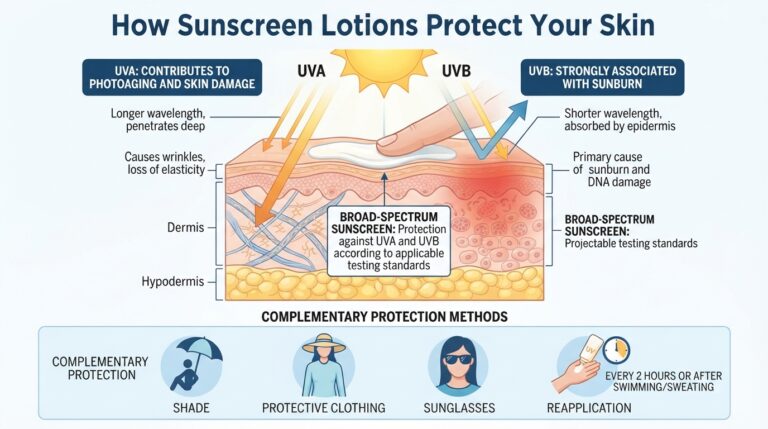
Look for sunscreens labeled as “broad spectrum.” This means they protect against both UVA and UVB rays, providing more comprehensive skin protection.
Water Resistance
If you plan to swim or sweat, choose a water-resistant sunscreen. However, remember that even water-resistant formulas need to be reapplied regularly.
How to Properly Use Sunscreen
Using sunscreen effectively is just as important as selecting the right product. Follow these steps for optimum protection:
Application Guidelines
- Apply sunscreen generously about 15 minutes before sun exposure.
- Use about one ounce (a shot glass full) for full-body coverage.
- Reapply every two hours, or immediately after swimming or sweating.
Additional Tips
Here are some extra tips to enhance your sun protection:
- Combine sunscreen with protective clothing, hats, and sunglasses.
- Avoid sun exposure during peak hours, typically between 10 AM and 4 PM.
- Consider using a lip balm with SPF to protect your lips.
Conclusion
Understanding when sunscreen expires is essential for maintaining effective skin protection against harmful UV rays. Always check the expiration date, look for signs of degradation, and store your sunscreen correctly to maximize its effectiveness. By choosing the right product and using it properly, you can enjoy the outdoors while keeping your skin healthy and protected.
Remember, protecting your skin is a lifelong commitment, so invest time into finding the right sunscreen and adhering to safety practices. Your skin will thank you!