
Figuring out whether to apply your smoothing base or your UV filters first can feel confusing on a busy morning. Getting the sequence wrong might disrupt your UV protection or leave your foundation looking patchy and uneven.
Sunscreen must always go on before primer. Putting your UV filters on first allows them to form an even, uninterrupted shield over your face. Slathering a cosmetic base underneath would dilute that protection, block the active ingredients from doing their job, and ruin your morning routine.
The Golden Rule of Skincare and Cosmetics Layering
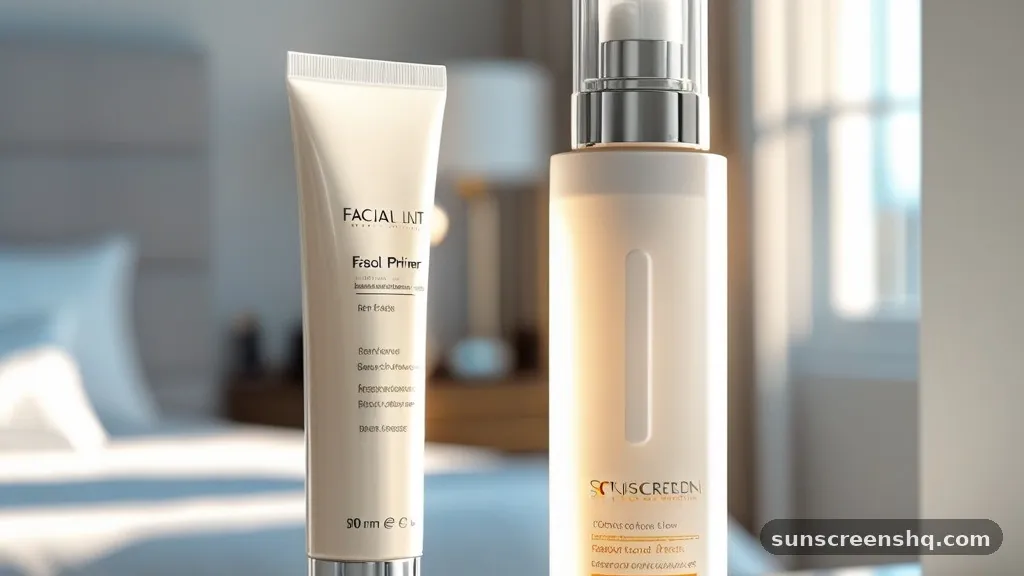
Sunscreen goes on before primer every single time. This is because chemical and mineral filters need direct contact with your epidermis to create an effective protective film.
If you put a smoothing base on first, you create a physical barrier that prevents your UV shield from adhering properly. That leaves your complexion vulnerable to premature aging and sunburn.
Your daily routine should generally transition from the thinnest formulas to the thickest ones, moving from pure skincare straight into your skincare makeup steps. Creams that block ultraviolet rays act as the final step of your morning skincare regimen. Once those protective filters dry down completely, you can safely begin your cosmetic routine.
Dermatologists often stress that disrupting this sequence compromises the stated sunscreen spf rating on the bottle. According to guidelines from the American Academy of Dermatology, UV protection products need to form an undisturbed layer to function as intended. Messing with that layer by adding cosmetic bases underneath leaves gaps in your defense.
Allowing Your UV Protection to Dry
Patience matters just as much as sequence. Rushing straight from your UV protectant into your cosmetic base causes both products to pill, ball up, and roll off your face. Give your protective lotion at least three to five minutes to set before you touch your face again.
You can tell your protectant is fully set when the shiny wet look disappears and the surface feels slightly tacky rather than slick. That tackiness is actually ideal for grabbing onto your primer makeup, helping it grip your face for all-day wear. If you apply your cosmetic base while your face is still wet, you risk wiping away your UV shield entirely.
Different formulas dry at different speeds. Chemical filters absorb quickly, while physical formulas containing zinc oxide can take a bit longer to settle into a matte finish. Keep that drying window in mind when you are running late.
How Different Formulas Interact on Your Face
The texture of your cosmetics dictates how well they play with your underlying UV lotions. Water-based formulas behave very differently from silicone-heavy smoothing bases. Choosing compatible items prevents pilling and keeps your final look smooth.
Silicone smoothing bases create a velvety canvas that fills in pores and fine lines. If you put them on top of a greasy or unabsorbed protective cream, the two formulas repel each other. This creates a messy texture that makes liquid foundation separate by lunchtime.
| Product Type | Recommended Timing | Primary Function |
|---|---|---|
| Chemical Sunscreen | Apply 15 minutes before sun exposure | Absorbs UV rays and converts them to heat |
| Mineral Sunscreen | Apply as the final skincare step | Reflects UV rays away from the skin |
| Makeup Primer | Apply after sunscreen has dried | Smooths texture and extends makeup wear |
Special Considerations for Tinted Formulas
Many modern beauty lovers skip traditional transparent lotions in favor of a tinted sunscreen that offers sheer color correction alongside UV defense. These multi-tasking formulas blur the lines between skincare and cosmetics, making the layering process slightly more nuanced.
Even if your UV lotion has a flesh-toned tint, it still functions primarily as a protective shield. You should still treat it as skincare rather than makeup. That means it goes on right after your moisturizer, and any dedicated smoothing base or color-correcting product waits until later.
If you wear a tinted protectant, you might find that you can skip a traditional cosmetic base altogether. Many formulas offer enough smoothing power on their own, allowing you to move straight from your UV defense to your foundation or concealer without missing a beat.
Troubleshooting Common Layering Mistakes
If your cosmetics are sliding off your nose by noon, your layering technique might be the culprit. Common mistakes include using incompatible base ingredients or failing to let your skincare absorb fully before introducing makeup products.
- Applying cosmetics too quickly before the UV lotion sets
- Mixing oil-based formulas with water-based shields
- Using too little protective product out of fear that it will ruin your makeup look
- Skipping the wait time needed for active ingredients to bind to the skin
Fixing these small errors transforms the longevity of your daily look. Give each layer a moment to breathe, and your cosmetics will stay put through heat, humidity, and long workdays.
Frequently Asked Questions
Can I mix my sunscreen and primer together?
You should never mix your UV protection with cosmetic bases in your hand before application. Doing so dilutes the active ingredients and compromises the protective film, leaving your skin vulnerable to sun damage and premature aging.
Does mineral sunscreen change how primer applies?
Mineral formulas sit on top of the skin rather than absorbing into it, which can sometimes create a chalky or dry texture. To prevent pilling, choose a hydrating base and pat your products on gently instead of rubbing them in hard.
What if my primer already contains SPF?
Cosmetics containing SPF rarely provide enough coverage on their own because nobody applies enough base product to reach the tested UV rating. Always apply a dedicated UV lotion underneath your makeup for real protection.
How long should I wait between sunscreen and primer?
Wait three to five minutes after applying your UV protection before smoothing on your cosmetic base. This brief pause ensures the protective ingredients settle into an even, effective shield.
Conclusion
Getting your morning routine right comes down to a simple rule: protect your skin first, then perfect your look. Always let your UV lotion dry completely before introducing any smoothing bases or cosmetics to the surface.
Taking that extra few minutes to layer properly keeps your complexion safe from UV rays while ensuring your makeup stays fresh all day long. Try adjusting your morning sequence tomorrow and see how much smoother your foundation sits.