
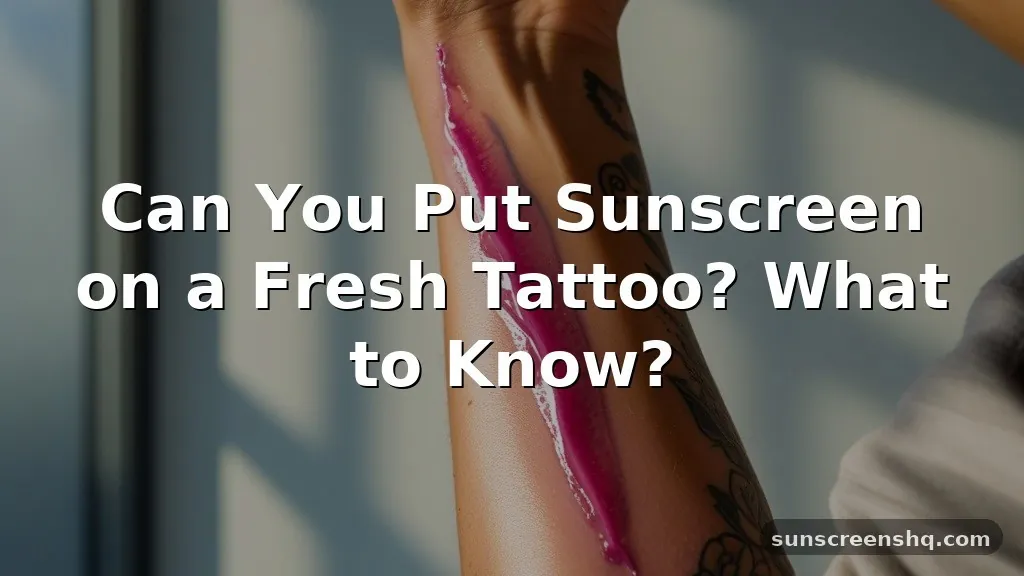
If you recently sat through a long shading session and now find yourself wondering whether you can put sunscreen on a fresh tattoo, you are definitely not alone. The short answer is no, you should never apply chemical or mineral sunblock to broken skin. A brand new body art piece is essentially an open wound that requires breathable healing rather than chemical shielding.
Applying lotions too early traps bacteria, irritates the delicate tissue, and ruins the vibrant pigments settling into the dermis. This article explores the precise healing timeline, the risks of premature UV protection, and the safest ways to safeguard your new body modifications from sun damage.
Why Fresh Ink and Sunscreen Do Not Mix
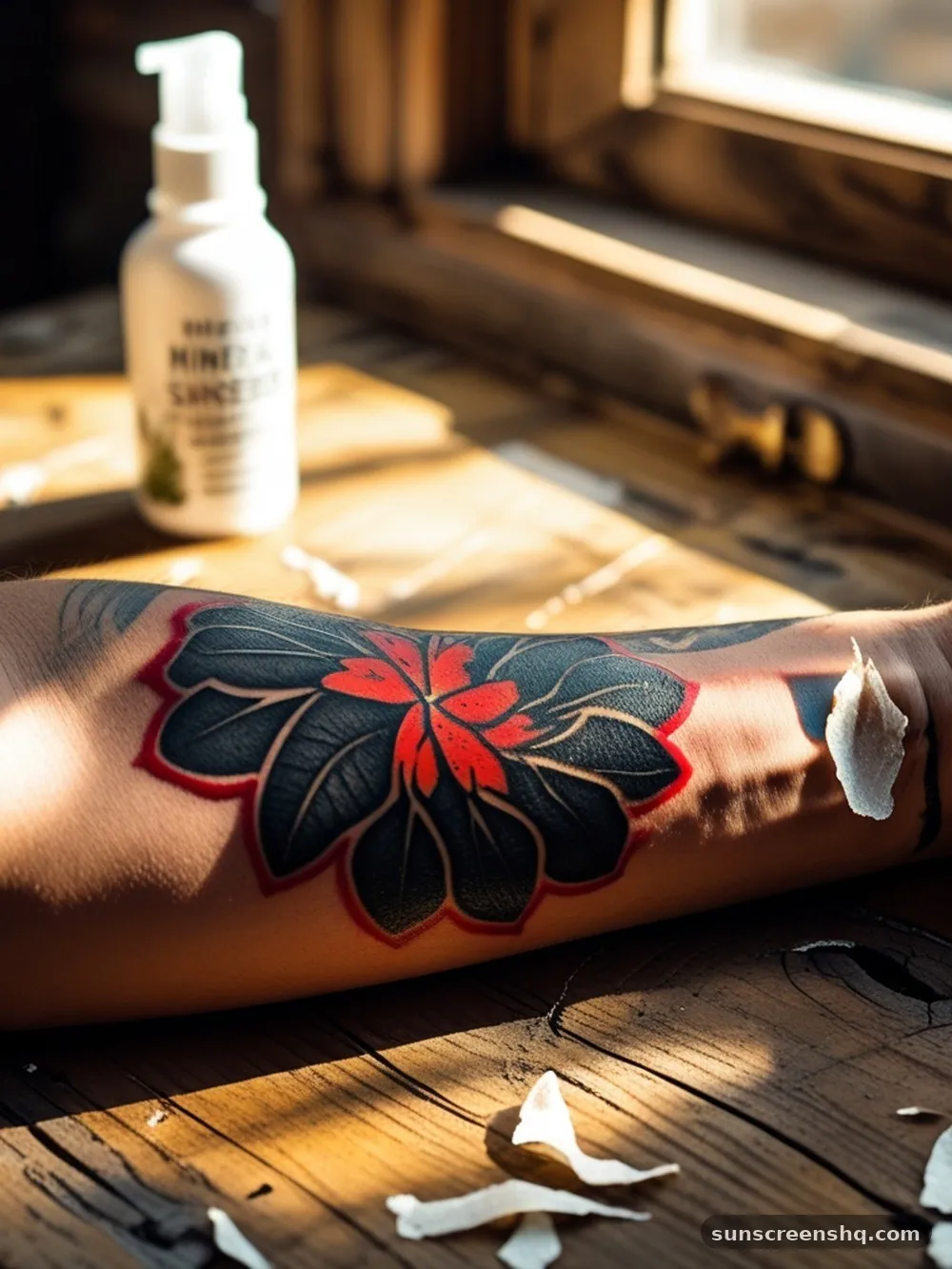
Putting chemical lotions on an open wound introduces unnecessary foreign ingredients into vulnerable dermal layers. Tattoo needles puncture the skin thousands of times per minute, creating micro-tears that leak plasma and ink. Tattoo ink settles into the lower layers of the skin, while the upper epidermis needs to shed and regenerate completely. Most commercial sunblocks contain synthetic fragrances, chemical UV filters, and heavy preservatives that sting open skin and trigger allergic reactions or severe contact dermatitis.
When you ask your tattoo artist about aftercare, they will almost always tell you to keep the area completely bare of active skincare products during the initial shedding phase. Trapping moisture and heat under a layer of dense lotion creates an ideal breeding ground for harmful bacteria. This can lead to localized infections, prolonged redness, and uneven ink retention that leaves faded patches across your design.
Understanding the Healing Timeline
The human body needs time to repair the epidermal barrier before it can tolerate topical blockers. During the first two weeks, your body focuses on closing the wounds and sloughing away dead skin cells encrusted with dried plasma. You must rely on breathable, fragrance-free aftercare balms or ointments in very thin layers, rather than trying to block ultraviolet rays with heavy lotions.
| Healing Stage | Skin Condition | Sunscreen Allowed? |
|---|---|---|
| Weeks 1 to 2 | Open wound, peeling, scabbing, tender | Strictly NO |
| Weeks 3 to 4 | Mostly closed, slight sheen, light flaking | Mineral-only, with caution |
| Month 2 and Beyond | Fully healed, smooth surface, settled ink | YES (Mineral formulas recommended) |
How to Shield Healing Skin from Ultraviolet Rays
Since you cannot apply protective lotions right away, you must rely on physical barriers to prevent solar radiation from fading your fresh artwork. Ultraviolet light breaks down modern pigment molecules rapidly, causing crisp black lines to blur and bright colors to wash out prematurely. The American Academy of Dermatology provides comprehensive guidelines on skin protection methods that emphasize physical shielding over chemical reliance when skin is vulnerable.
The safest strategy involves wearing loose-fitting, tightly woven clothing over the tattooed area whenever you step outside. Cotton and bamboo fabrics breathe well while blocking harmful rays without sticking to your healing skin. If your piece is on your forearm, a light long-sleeve shirt or a UV-protective sleeve works much better than exposing the tender dermis to direct sunlight during your daily commute.
Transitioning to Mineral Protection
Once your skin stops peeling and feels completely smooth to the touch, you can finally introduce sun protection products. Mineral formulas containing zinc oxide or titanium dioxide are far safer for your skin than chemical alternatives because they sit on top of the skin rather than absorbing into it. Chemical blockers convert UV rays into heat within the skin layers, which can irritate sensitive, recently healed tissue.
- Wait until every trace of flaking and scabbing has vanished completely.
- Choose a broad-spectrum, fragrance-free mineral stick or cream with an SPF of 30 or higher.
- Test a tiny dab on the edge of the artwork twenty-four hours before full application.
- Wash the area gently with mild soap at the end of the day to prevent pore clogging.
Long-Term Preservation for Body Art
Protecting your body art does not end once the initial healing phase concludes. Ultraviolet exposure remains the single greatest enemy of permanent body modifications over a lifetime. Continuous sun exposure degrades the microscopic pigment particles trapped in your dermis, causing vibrant shades to fade into dull, blurry smudges after a few summers.
Make daily SPF application a permanent habit for all exposed body art, even on cloudy days when UV rays penetrate through cloud cover. Reapply your chosen mineral block every two hours if you spend extended time outdoors swimming or sweating. This simple daily routine preserves the sharp contrast and rich saturation of your favorite designs for decades to come.
Addressing Common Aftercare Misconceptions
Many people assume that waterproof or baby formulations are automatically safe for broken skin because they look gentle on store shelves. In reality, waterproof formulas rely on heavy silicones and polymers that seal the skin completely, trapping sweat and heat where bacteria thrive. Similarly, natural or organic sunblocks often contain essential oils and plant extracts that can cause severe allergic contact dermatitis on sensitive, healing dermal tissue.
Another common mistake involves assuming that a light tan means the skin underneath is fully safe and ready for chemical lotions. Even if the surface no longer hurts, the underlying dermal layers continue repairing microscopic structural damage for up to eight weeks. Patience during this critical window ensures your investment stays crisp, vibrant, and infection-free for the long haul.
Frequently Asked Questions
How soon can you put sunscreen on a new tattoo?
You must wait until the skin is fully healed, which typically takes at least three to four weeks. Applying any active lotion to broken or peeling skin introduces severe infection risks and damages settling pigments.
Can I wear tight clothing instead of lotion outdoors?
Yes, wearing loose, breathable clothing made from natural fibers like cotton is the best way to block UV rays while your skin heals. Avoid tight synthetic fabrics that trap sweat and rub against the tender surface.
Is mineral sunscreen better than chemical for healed ink?
Mineral blockers containing zinc oxide or titanium dioxide are significantly safer because they reflect ultraviolet rays physically. Chemical alternatives absorb into the skin and generate heat, which can irritate sensitive dermal tissue.
What happens if UV rays hit a healing piece of body art?
Unprotected exposure breaks down fresh pigment molecules rapidly, causing premature fading and blurring. It also increases inflammation and can cause blistering across the tender, healing skin surface.
Conclusion
Protecting your new body art requires patience, discipline, and the right physical barriers during the delicate early stages of recovery. Resisting the urge to apply active lotions too soon prevents painful infections and keeps your investment looking sharp for years.
Embrace loose clothing and shade until the skin closes up completely, then transition to gentle mineral formulas for long-term defense. Reach out to your local studio professional if you notice persistent redness or unusual irritation.