
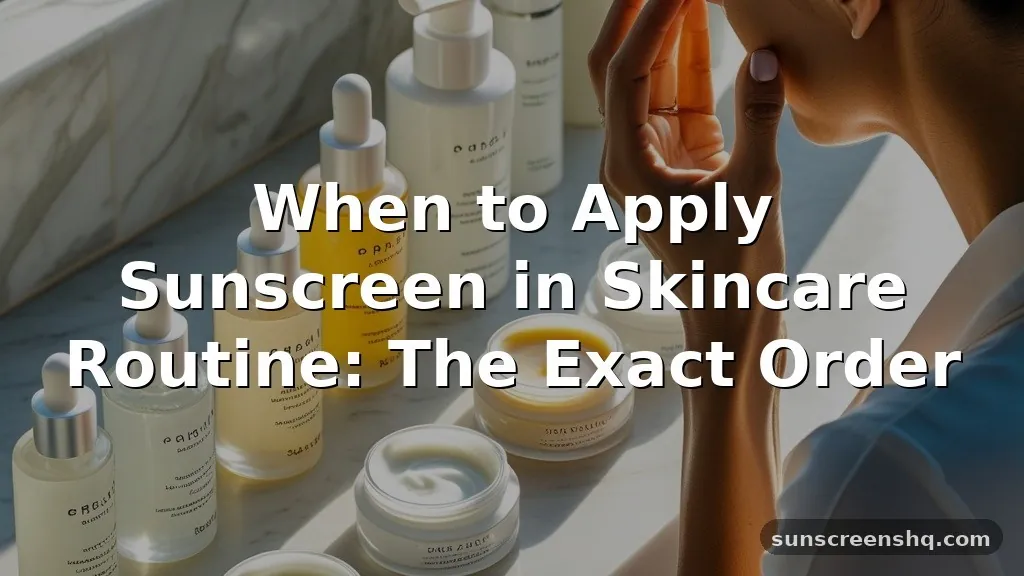
Working out when to apply sunscreen in your skincare routine can feel confusing with so many layers involved. Getting the order wrong can actually dilute your sun protection and leave your face vulnerable to damaging rays.
Knowing exactly how to sequence your morning regimen ensures your sunscreens form an even shield against the sun. Let’s look at the correct steps for healthy skin care.
The Golden Rule of Layering Your Morning Regimen
When you map out your morning routine, sunscreen should always be the final step of your skincare application before makeup. Dermatologists agree on this order because chemical formulas need direct contact with bare skin to absorb properly, while mineral options sit on top to block light. If you layer thick creams or oils over your protection, you disrupt that crucial film and ruin its efficacy.
Think of your face as a canvas. You want your treatment serums and hydrating moisturizers absorbed deep down first.
Once those layers sink in, your sunscreen locks everything in place while guarding against environmental damage. Messing up this sequence means your active ingredients block the SPF from doing its job, or your SPF blocks your treatment products from working.
Why Order Matters for UV Defense
Physics dictates how well your protection works. A skincare routine relies on molecular weight and product thickness to determine application order. Lighter liquids go first, followed by heavier creams.
If you put a thick cream over your sunscreen, you smudge the protective barrier. This creates microscopic gaps where UV light penetrates. Sticking to the correct sequence guarantees maximum benefits for your complexion.
Where Sunscreen Fits Among Your Serums and Creams
Building a successful regimen requires moving from thinnest to thickest consistency. Your watery toners and lightweight vitamin C serums go on naked skin first. Give them a minute to dry before moving on to the next step.
Next comes your hydration step. Using lightweight moisturizers keeps your complexion supple without feeling heavy. Once that cream absorbs completely, it is time for your sunscreen.
The American Academy of Dermatology provides helpful guidance on sunscreen safety and proper usage to ensure your routine offers maximum defense. Skipping this step or burying your SPF under heavy balms leaves your face exposed.
Combining Moisturizer and SPF
Many people try to save time by mixing their hydration step with their UV protection. This practice is risky. Mixing products dilutes the active filters, meaning you do not get the labeled SPF rating.
Instead, apply them sequentially. Let your standard moisturizer dry down for two minutes. Follow it immediately with a dedicated lotion that contains your required SPF level.
Transitioning from Skincare to Makeup
The boundary between skincare and cosmetics is where many routines fail. You must let your sunscreen set completely before applying foundation or tinted primer. Rushing this step causes pilling and streaks.
Wait at least three to five minutes after applying your sunscreen before touching your face with makeup brushes. This curing time allows the UV filters to form a uniform film across your features. If you apply liquid foundation too quickly, the friction lifts the protective layer right off your cheeks and forehead.
| Product Category | Application Order | Drying Time Needed |
|---|---|---|
| Serums & Toners | First | 1 minute |
| Hydrating Cream | Second | 2 minutes |
| Daily Sunscreen | Third (Final Skincare Step) | 3 to 5 minutes |
| Makeup & Primer | Fourth | As needed |
Choosing the Right Finish
The texture of your sunscreen dictates how well cosmetics sit on top. A greasy formula ruins your foundation, while a matte finish acts like a grip primer. Finding a product that meshes well with your makeup keeps your daily habits simple.
Maintenance and Reapplication Throughout the Day
Applying your SPF in the morning is only half the battle. UV filters break down when exposed to daylight, sweat, and natural facial oils. To maintain continuous defense, you need to reapply sunscreen every two hours if you remain outdoors.
Office workers sitting by windows also face UVA exposure that penetrates glass. Reapplying over a full face of makeup can seem daunting, but powder formulas and setting sprays with SPF make upkeep easy during the day.
- Use a nickel-sized amount for your face, neck, and ears to ensure proper coverage.
- Pat your products on gently rather than rubbing them in aggressively.
- Carry a SPF-infused setting powder or cushion compact for midday touch-ups over makeup.
- Check expiration dates regularly since degraded active ingredients lose their blocking power.
Common Mistakes That Compromise Your Protection
Even with the right products, tiny errors ruin your daily defense. One frequent mistake is using too little product. Most people apply only half the required amount, dropping an SPF 50 down to an effective SPF 10.
Another error involves waiting too long to go outside after application. While chemical filters need about twenty minutes to bind with your skin, mineral zinc oxide works instantly. However, rushing through your routine often leads to missed spots around the hairline and eyelids.
Overlooking Sensitive Zones
People often focus solely on their cheeks and forehead while missing critical areas. The tops of the ears, the back of the neck, and the lips require equal attention during your morning routine.
Protecting these areas prevents premature aging and skin damage over time. Make it a habit to sweep your leftover sunscreen down your neck and over your ears every single morning.
Frequently Asked Questions
Should sunscreen go before or after moisturizer?
Sunscreen should always go after your moisturizer. Moisturizers are designed to penetrate the skin barrier to hydrate, whereas sunscreens need to sit on top of the skin to reflect or absorb UV rays effectively.
Can I mix my sunscreen with my foundation?
You should never mix sunscreen with foundation or moisturizer. Diluting sunscreen alters its chemical formulation and reduces its SPF rating, leaving your skin vulnerable to sun damage and premature aging.
How long should I wait before applying makeup over sunscreen?
Allow your sunscreen to set for three to five minutes before applying any makeup. This waiting period lets the UV filters form an even, protective film across your face without pilling.
Do I need sunscreen if I stay indoors all day?
Yes, you still need protection indoors. UVA rays pass easily through glass windows, causing cumulative skin damage and photoaging even when you are sitting at home or working in an office.
Conclusion
Mastering when to apply sunscreen in your skincare routine transforms your daily habits into a reliable shield against premature aging. Putting your UV protection on last ensures your active ingredients stay intact and effective. Stay consistent with your morning routine, remember to reapply when outdoors, and your skin will thank you for years to come.