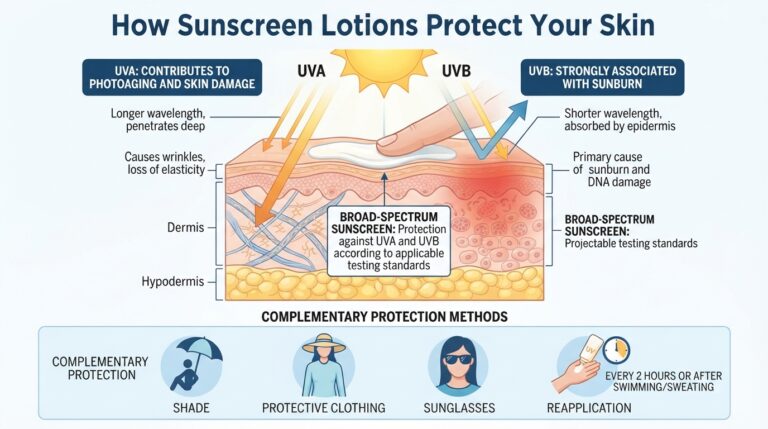

When it comes to protecting your skin from harmful UV rays, understanding the difference between sunscreen and sunblock is essential. While both products serve the same purpose of shielding your skin from sun damage, they do so in different ways. This article will delve into the nuances of these two sun protection products, helping you make informed decisions about your skincare routine.
What Is Sunscreen?
Sunscreen is a topical product designed to absorb UV radiation, preventing it from penetrating the skin. It typically contains organic (chemical) compounds that help filter the sun’s rays. Common ingredients found in sunscreens include:
- Avobenzone
- Octisalate
- Octocrylene
- Oxybenzone
How Sunscreen Works
The active ingredients in sunscreen work by absorbing UV radiation, converting it into heat, and then releasing it from the skin. This means that when you apply sunscreen, it forms a protective layer that helps shield your skin from the sun’s harmful effects. The effectiveness of sunscreen is often measured by its Sun Protection Factor (SPF) rating, which indicates how long it can protect your skin from UVB rays.
Benefits of Using Sunscreen
Choosing sunscreen has several benefits, including:
- Lightweight and non-greasy formulations
- Variety of formulations available for different skin types
- Easy to apply and reapply throughout the day
- Often includes added skincare ingredients, such as antioxidants
What Is Sunblock?
Contrary to sunscreen, sunblock is a physical blocker that reflects and scatters UV radiation. It usually contains mineral ingredients like zinc oxide or titanium dioxide, which create a barrier on the skin’s surface. This barrier prevents UV rays from penetrating the skin, making sunblock an effective option for those seeking broad-spectrum protection.
How Sunblock Works
Sunblock works differently from sunscreen. Instead of absorbing UV rays, it deflects them. This characteristic makes sunblock particularly effective immediately after application, providing instant protection. Moreover, because it sits on top of the skin, it is less likely to cause irritation, making it suitable for sensitive skin.
Advantages of Using Sunblock
Sunblock offers numerous advantages, including:
- Immediate protection upon application
- Less likely to irritate sensitive skin
- Broad-spectrum protection against both UVA and UVB rays
- Water-resistant options available
Key Differences Between Sunscreen and Sunblock
Understanding the differences between sunscreen and sunblock is crucial for effective sun protection. Here are some of the main distinctions:
| Feature | Sunscreen | Sunblock |
|---|---|---|
| Active Ingredients | Chemical filters (e.g., avobenzone, oxybenzone) | Mineral filters (e.g., zinc oxide, titanium dioxide) |
| Protection Mechanism | Absorbs UV rays | Reflects and scatters UV rays |
| Application Time | Needs 20-30 minutes to absorb | Provides immediate protection |
| Skin Compatibility | May irritate sensitive skin | Generally suitable for sensitive skin |
| Texture | Usually lightweight and fluid | Often thicker and pastier |
Choosing the Right Product for Your Needs
When deciding between sunscreen and sunblock, consider several factors:
Skin Type
Your skin type plays a significant role in determining the right sun protection product for you:
- Sensitive Skin: If you have sensitive skin, sunblock may be a better option due to its mineral-based formulation, which is less likely to cause irritation.
- Oily or Acne-Prone Skin: Lightweight gel or fluid sunscreens may work better, as they are less likely to clog pores.
- Dry Skin: Cream-based sunscreens with added moisturizers can provide hydration while offering sun protection.
Activity Level
Your level of physical activity can influence your choice as well:
- Water Activities: If you plan to swim or sweat, look for water-resistant formulations, which are available in both sunscreens and sunblocks.
- Daily Use: For everyday protection, a lightweight sunscreen may be more comfortable for regular wear.
Broad-Spectrum Protection
It’s crucial to choose a product that offers broad-spectrum protection, regardless of whether you opt for sunscreen or sunblock. This means it protects against both UVA and UVB rays, reducing the risk of skin damage and premature aging.
Application Tips for Maximum Effectiveness
To ensure you receive the full benefits of either sunscreen or sunblock, follow these application tips:
- Apply Generously: Use about an ounce (a shot glass full) of product for full-body coverage.
- Reapply Regularly: Reapply every two hours, or more often if swimming or sweating.
- Use on All Exposed Skin: Don’t forget areas like your ears, neck, and the tops of your feet.
- Check Expiration Dates: Ensure your product is within its expiration date for optimal effectiveness.
Common Misconceptions About Sunscreen and Sunblock
Several myths surround sunscreen and sunblock. Here are some common misconceptions:
- Dark Skin Doesn’t Need Protection: Everyone, regardless of skin tone, can suffer from sun damage and should use sun protection.
- SPF 100 Means Double the Protection: SPF ratings are not linear; SPF 30 blocks about 97% of UVB rays, while SPF 100 blocks about 99%.
- Indoor Exposure Doesn’t Require Sunscreen: UV rays can penetrate windows, so it’s advisable to wear sun protection indoors as well.
Conclusion
Understanding the difference between sunscreen and sunblock is crucial for effective sun protection. While both products have their unique benefits and characteristics, the choice between them ultimately depends on your skin type, lifestyle, and personal preferences. By selecting the right product and applying it correctly, you can enjoy the sun safely while minimizing the risk of skin damage and skin cancer. Remember, sun safety is a year-round commitment!